
Book 6, Question 27
Why Don't Fish Drown?
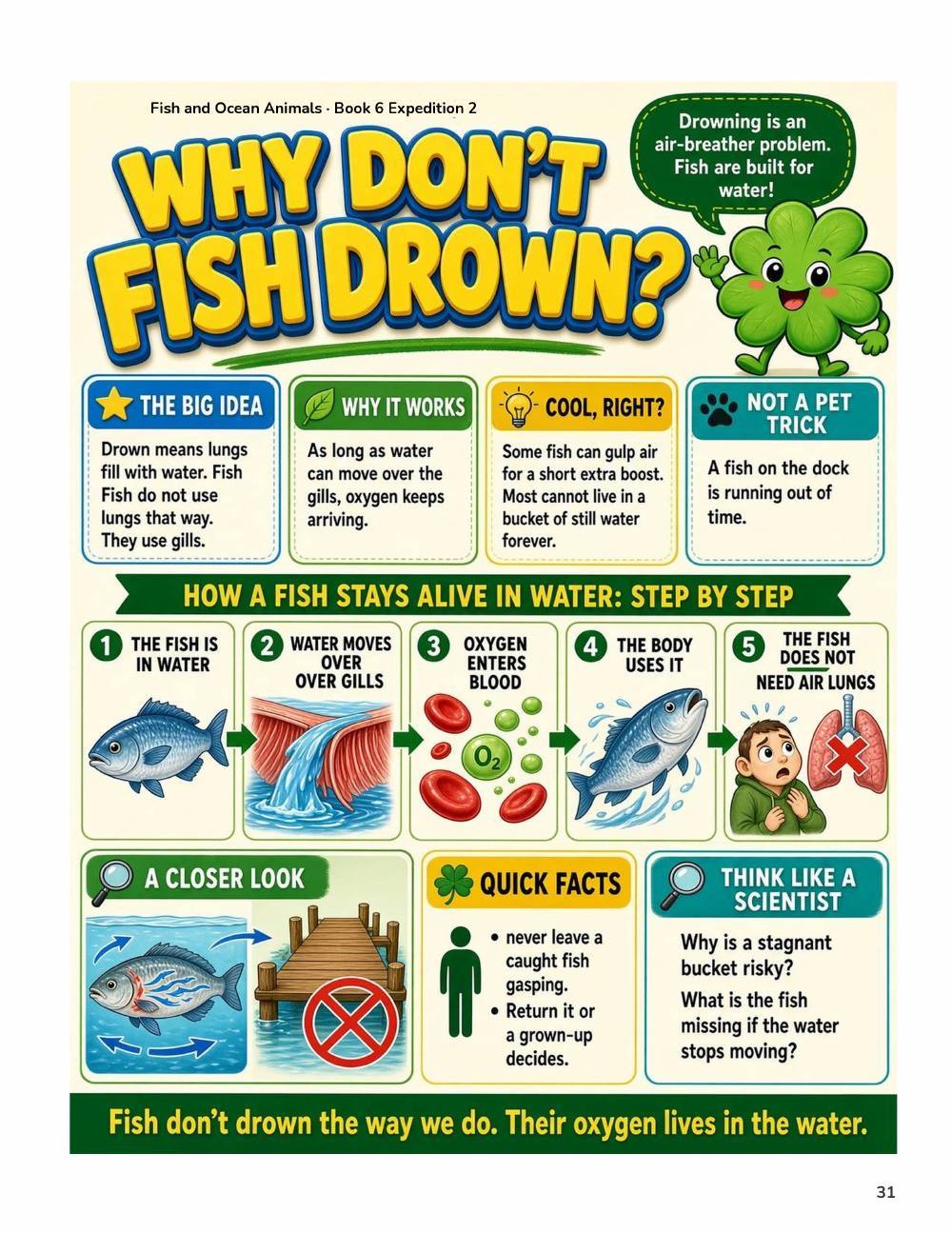
Fish don't drown because they have no lungs to fill with water; their gills take oxygen that is dissolved in the water.
Drowning happens when lungs fill with water, and fish do not use lungs. They use gills, which are built to pull oxygen out of water. That is why a fish is safe underwater but struggles on land!
Watch the videoWatch on YouTubeSee the series on Amazon
Quick answers
Can fish run out of oxygen?
Yes. If the gills are damaged or water cannot flow over them, a fish can die from lack of oxygen.
Sources: livescience.com, U.S. EPA
From the book
Page from A Million Whys Book 6
More fun facts
- Fish need oxygen too, but they take in oxygen that is dissolved in water, not oxygen from the air.
- Most fish breathe when water moves across their gills.
- Fish do not technically drown, because they do not breathe water into lungs, but they can suffocate.
- If the gills are damaged or water cannot flow over them, a fish can die from lack of oxygen.
- Some fish can pump water over their gills while resting, but many must keep swimming so water keeps flowing past.
- Sometimes tiny plankton use up the oxygen in an area so fast that fish there suffocate.
Sources: livescience.com, U.S. EPA
Questions kids ask
Can a fish drown?
Not the way people do, but a fish can suffocate if its gills are damaged or water with enough oxygen can't flow over them.