
Book 7, Question 129
Why Do Kids’ School Apps Send Weather Alerts?
School apps and phones send weather alerts when a watch or warning covers your area, even if the sky looks calm.
Sometimes your family's phone buzzes with a weather alert, even when the sky looks calm. An alert pings when a watch or warning affects your area. It is like a digital tap on the shoulder, so families can act fast!
Watch the videoWatch on YouTubeSee the series on Amazon
Quick answers
When did phone alerts start?
The National Weather Service began sending Wireless Emergency Alerts to phones on June 28, 2012.
From the book
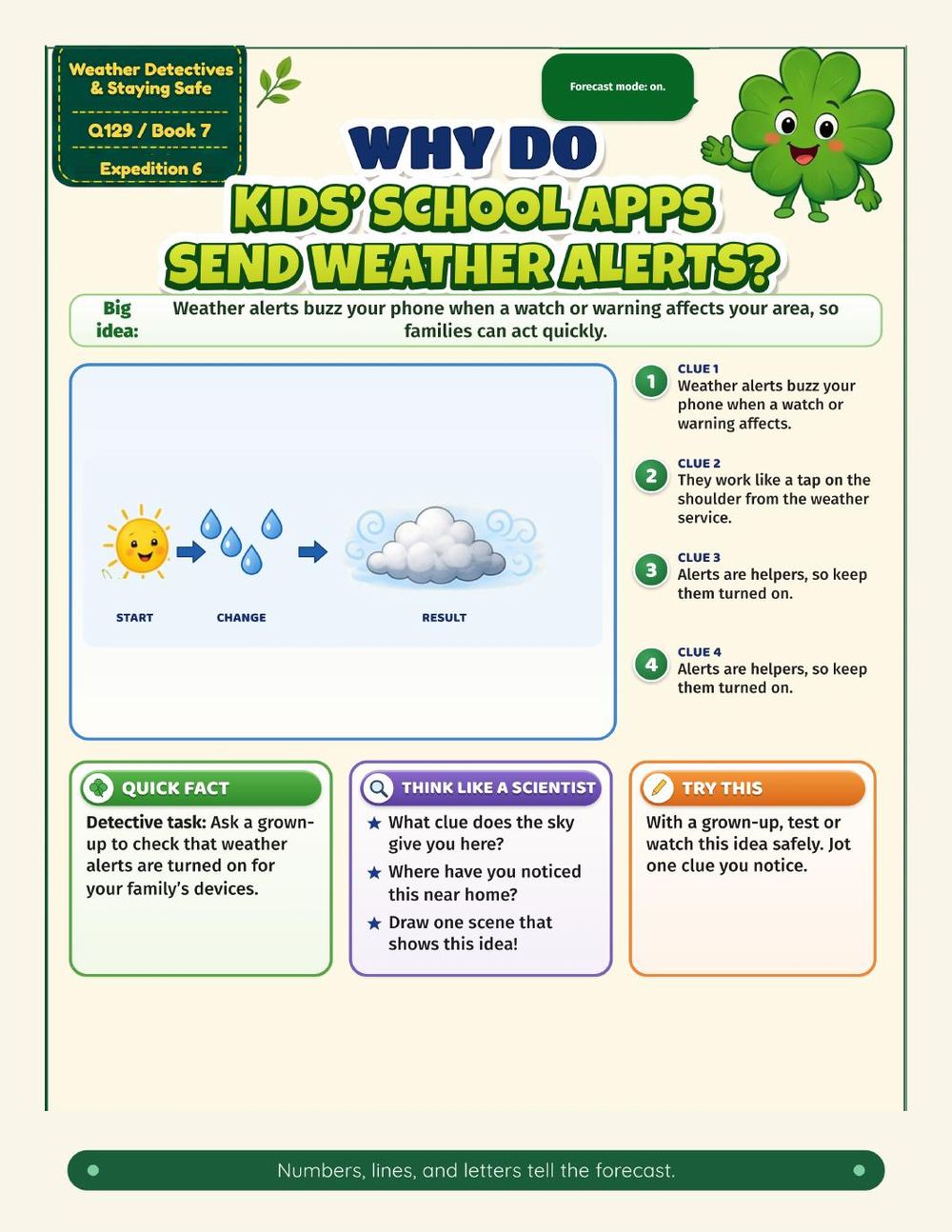
Page from A Million Whys Book 7
More fun facts
- The National Weather Service began sending Wireless Emergency Alerts to phones on June 28, 2012, working with FEMA.
- Alerts are sent to every compatible phone near a cell tower at once, using a system called Cell Broadcast.
- The alerts are location-based, so they go to people in the path of danger, any time of day or night.
- Early alerts were limited to 90 characters, and they are being expanded to up to 360 characters.
- In July 2012, people in Elmira, New York, said phone alerts helped them reach their basements before a tornado hit.
- If you get a Wireless Emergency Alert, take action right away.
Questions kids ask
How does a phone get a weather alert?
Alerts are broadcast from cell towers to all compatible phones in the area of danger.
When did weather alerts on phones begin?
The National Weather Service started sending them on June 28, 2012.