
Book 5, Question 31
Squished Fossils? Why Do Some Look Smashed or Stretched?
Some fossils look smashed or stretched because heavy rock layers press on them for millions of years.
Fossils sit inside rock for millions of years, with heavy layers pressing down on them. Pressure and slow movements of the ground can squash, bend, or stretch them. Scientists have to be careful to figure out what a fossil looked like before it changed.
Watch the videoWatch on YouTubeSee the series on Amazon
Quick answers
What is a compression fossil?
A compression fossil has been crushed or flattened but still holds some of the original material.
What is an impression fossil?
An impression fossil is a shallow print left in rock, with none of the original material left.
Sources: National Park Service, BBC
From the book
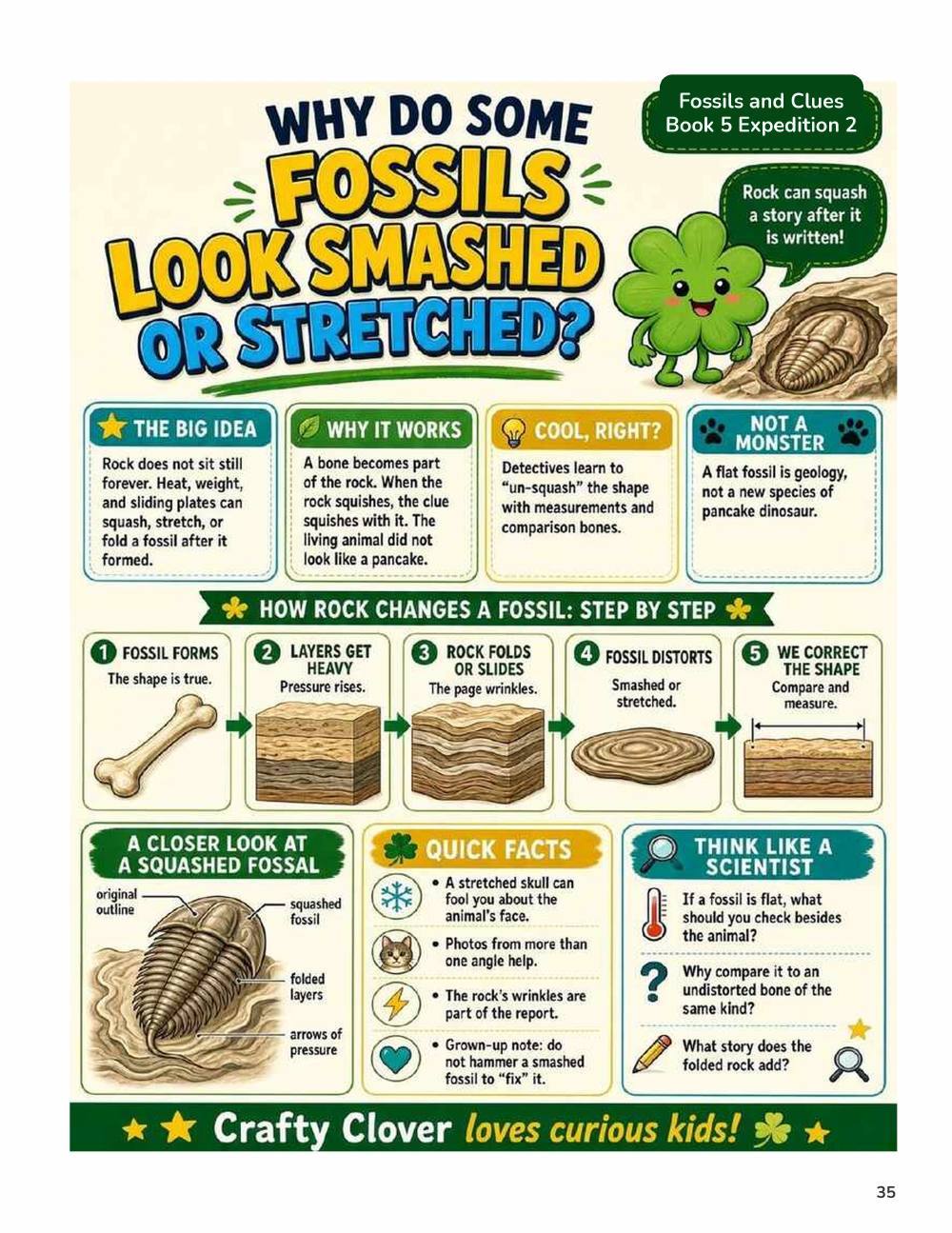
Page from A Million Whys Book 5
More fun facts
- Buried fossils sit under layers of rock for millions of years, under a lot of pressure.
- A compression fossil is one that has been crushed or flattened but still holds some of the original material.
- An impression fossil is a shallow print left in rock, with none of the original material left.
- During carbonization, the remains turn into a thin, dark brown film of carbon.
- Fossil Butte and Florissant Fossil Beds in the United States are famous for flattened fossils with amazingly fine details.
Sources: National Park Service, BBC
Questions kids ask
Why do some fossils look flat?
The weight of rock layers above pressed them flat over millions of years.