
Book 1, Question 142
Why Does Milk Go Sour? Tiny Microbes Make Acid!
Milk goes sour because bacteria eat its sugar, called lactose, and turn it into lactic acid, which makes the milk taste sour and form lumps.
Milk goes sour because of tiny living things. Milk has sugars that microbes can eat, and those microbes make acid, and acid makes milk taste sour and get lumpy. The page compares fresh milk with sour milk, which has thick white lumps called curds. Cold slows the microbes down. Check the date and smell with a grown-up, and never drink spoiled milk.
Watch the videoWatch on YouTubeBuy on Amazon
Quick answers
Doesn't pasteurizing kill bacteria?
It kills germs that cause disease, but tough survivors slowly spoil milk.
What are curds?
Soft lumps that form when acid makes milk proteins called casein clump together.
Source: National Geographic
From the book
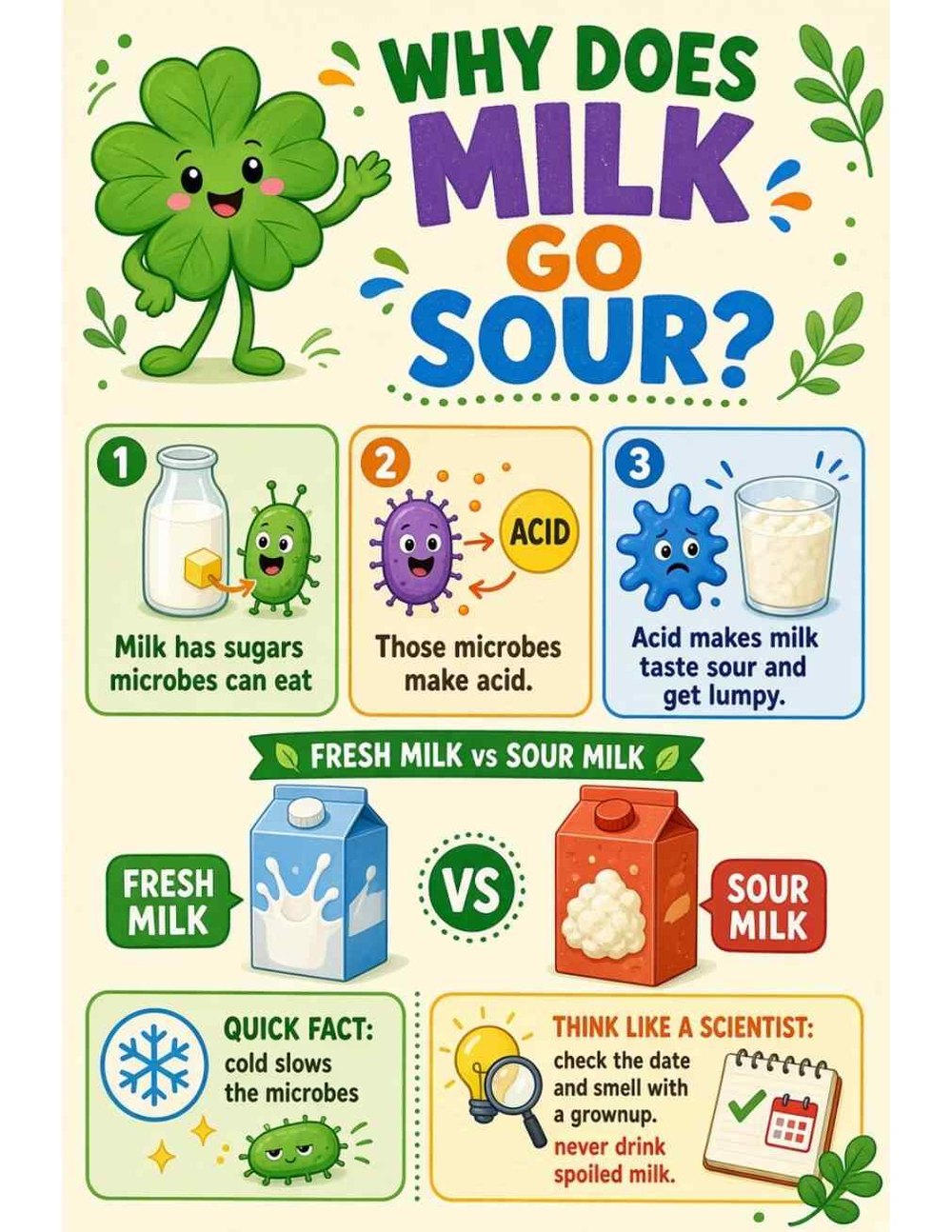
Page from A Million Whys Book 1
More fun facts
- Most milk is pasteurized, heated to about 162 degrees Fahrenheit for about 15 seconds to kill germs that cause disease.
- Pasteurizing doesn't kill every bacterium, and the tough survivors are what slowly spoil milk.
- Milk sugar is called lactose. Bacteria eat it and turn it into lactic acid.
- The acid makes milk proteins called casein clump together into soft lumps called curds.
- If sour milk sits even longer, yeasts and molds can start to grow in it.
- Scientists have built a high-tech smart cap with sensors that can tell if milk has gone bad.
Sources: National Geographic
Questions kids ask
What does pasteurizing milk do?
It heats milk briefly to kill germs that cause disease.
What are curds?
Soft lumps that form when acid makes milk proteins clump together.