
Book 1, Question 129
Why Does Salt Melt Ice? Getting in the Way of Freezing!
Salt melts ice because it lowers the temperature at which water freezes, so the ice must be colder to stay solid.
Ice and a little water sit together, and adding salt changes things. Salt gets in the way of freezing, so the ice must be colder to stay solid, and it melts. The page says salty slush can stay liquid below 0 degrees C. Sprinkle salt on one ice cube and compare it with one that has no salt.
Watch the videoWatch on YouTubeBuy on Amazon
Quick answers
What is this called?
Freezing point depression. The more salt you add, the lower the freezing point goes.
How much road salt is used?
The United States spreads more than 22 million tons of salt on roads each year, and scientists track how it affects streams.
Sources: Science News Explores, NOAA, Smithsonian Magazine, U.S. Geological Survey
From the book
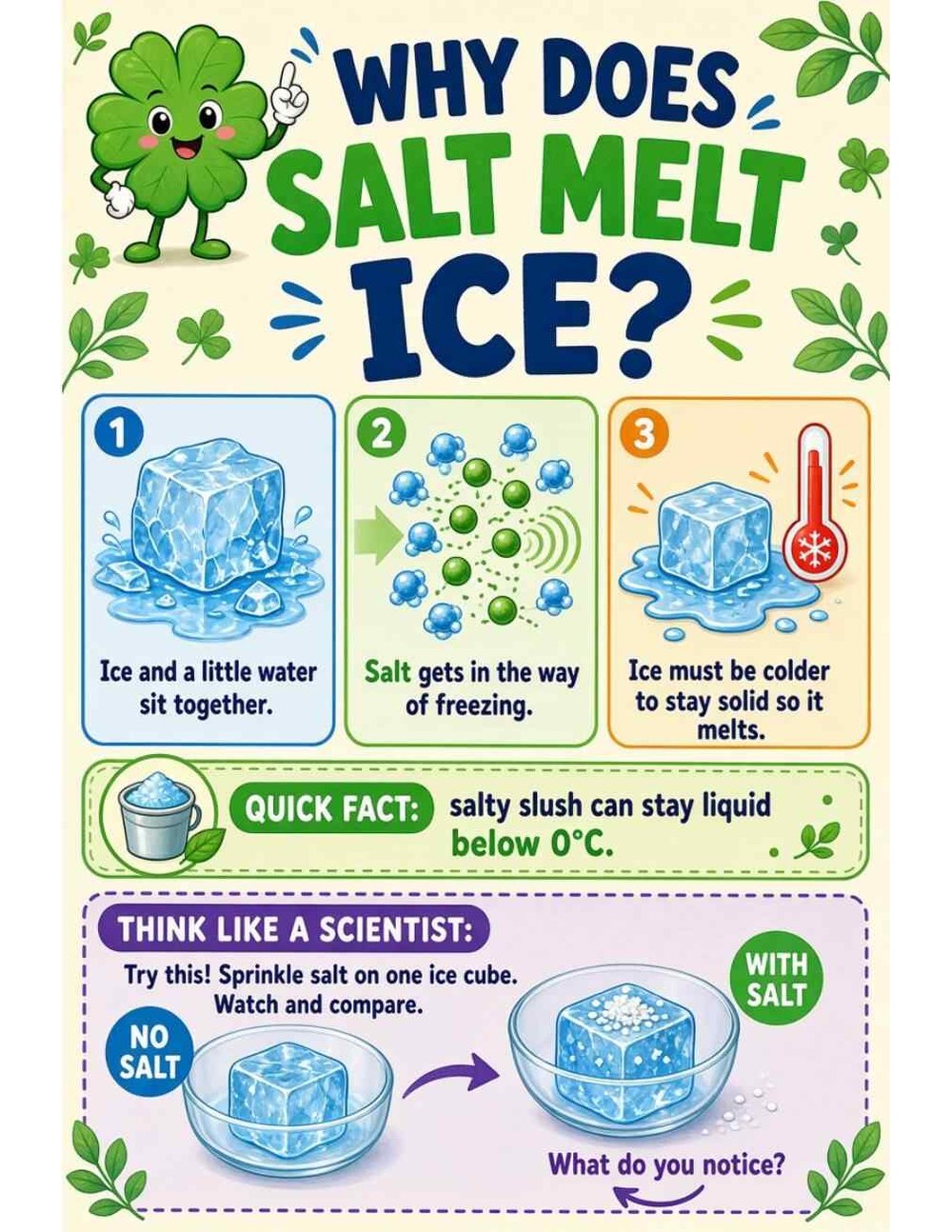
Page from A Million Whys Book 1
More fun facts
- Salt lowers the temperature at which water freezes. Scientists call this freezing point depression.
- Salt and ice together can get colder than plain ice, which is how old-fashioned ice cream makers freeze cream.
- The more salt you add, the lower the freezing point goes.
- The United States spreads more than 22 million tons of salt on roads each year.
- Road salt washes into streams, lakes and groundwater.
- Chloride from road salt can harm water plants and animals at high levels, so scientists keep track of it.
- In 2004, Canada listed road salt as a toxic substance and made new rules for using it.
Sources: Science News Explores, NOAA, Smithsonian Magazine, U.S. Geological Survey
Questions kids ask
How do you make ice cream with salt and ice?
Salt makes ice colder than its normal freezing point, cold enough to freeze the cream.
Is road salt bad for nature?
At high levels, the chloride in road salt can harm water plants and animals.