
Book 1, Question 7
Why Do Scabs Form? Your Body's Build-a-Bandage Crew!
Scabs form because platelets and other parts of the blood make a clot over a cut, which dries into a hard, protective cover while new skin grows underneath.
A scrape stings, but your body already has a repair plan. When skin is damaged, special cells rush in and your body weaves a net of fibrin that catches blood cells and turns into a soft clot. The clot dries and hardens into a scab, which works like a temporary roof while new skin grows underneath. The page also busts a myth: scabs are not caused by dirt, they are your body's natural bandage. When the skin below is ready, the scab falls off.
Watch the videoWatch on YouTubeBuy on Amazon
Quick answers
Who are the first helpers at a cut?
Platelets. These blood cells stick together like glue to start the clot.
What happens under the scab?
Your body makes new skin cells, and white blood cells fight germs and clean up old cells.
Should you pick a scab?
No. Picking can tear the skin again, so the cut may take longer to heal.
Source: KidsHealth (Nemours)
From the book
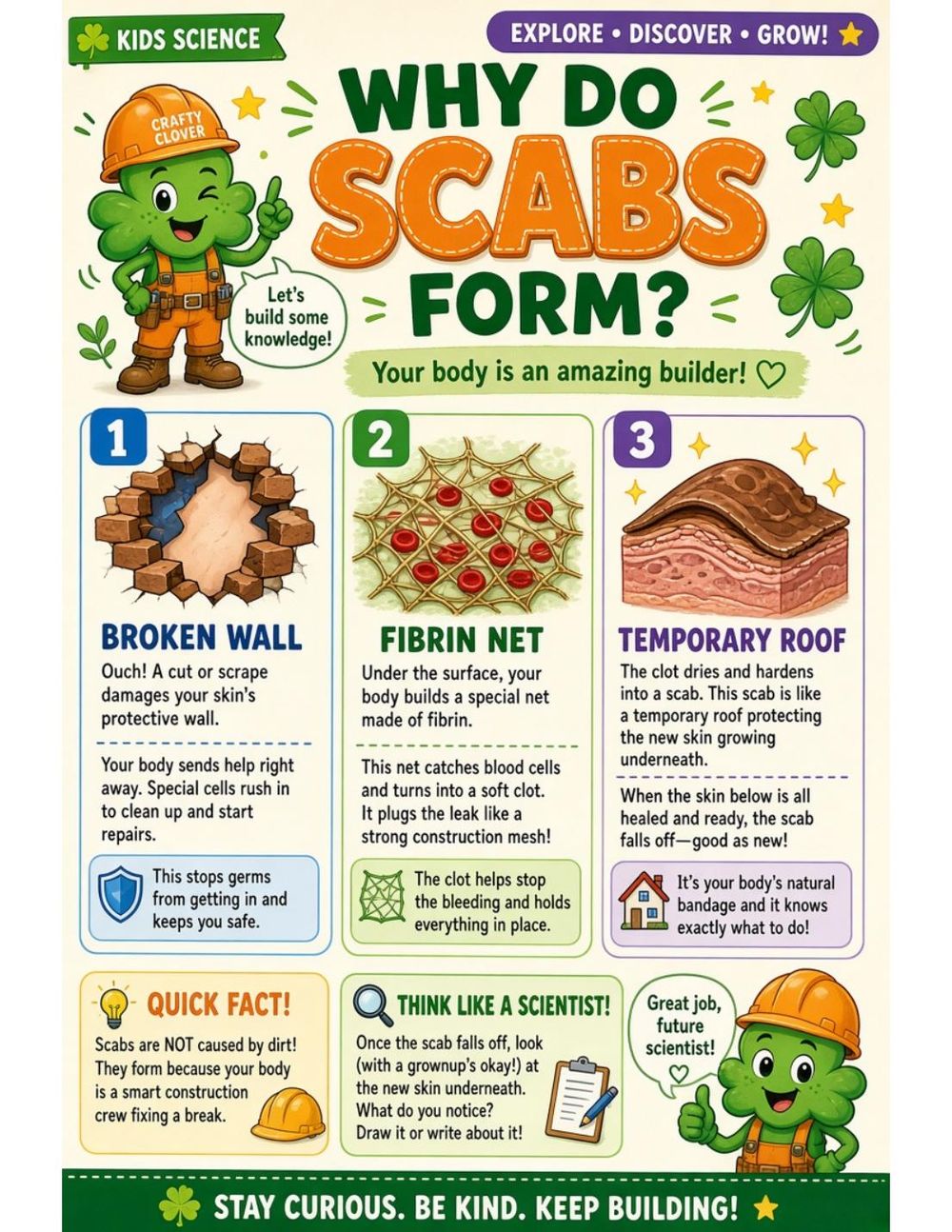
Page from A Million Whys Book 1
More fun facts
- The first helpers to show up are special blood cells called platelets. They stick together like glue to start the clot.
- A scab is usually crusty and dark red or brown.
- Under the scab, your body is busy making brand new skin cells to patch the torn skin.
- White blood cells, the germ fighters in your blood, attack any germs that sneak into the cut.
- White blood cells also clean up dead blood cells and skin cells left around the cut.
- When the repair is finished, the scab falls off and shows the new layer of skin underneath.
- Picking a scab can undo the repair and tear your skin again, so the cut may take longer to heal.
Sources: KidsHealth (Nemours)
Questions kids ask
Why shouldn't I pick my scab?
Picking can rip the skin open again and undo the repair, so the cut usually takes longer to heal.
What is a scab made of?
Platelets stuck together, other blood cells, and threads called fibrin, all dried and hardened.